
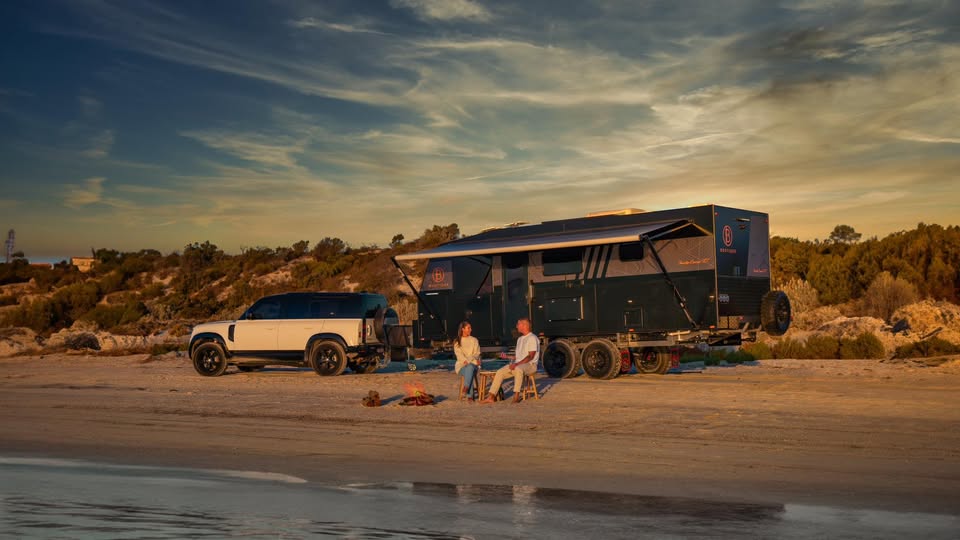
The Australian Outback has a way of changing how you think about travel. Distances feel longer, weather can change quickly and a road that looks simple on a map can be very different when you are actually towing a caravan along it.
At Boutique Caravans Australia, conversations with caravan travellers often come back to the same thing: the best Outback trips are rarely about rushing from one destination to another. They are about preparation, patience and knowing what your setup can handle.
After spending time around caravans and listening to travellers talk about their experiences on Australian roads, we have picked up a few practical lessons that are worth knowing before heading into remote country.
Do not underestimate the distances
One of the easiest mistakes to make is planning an Outback trip like a normal road trip.
You might look at a map and think two destinations are reasonably close. Then you discover that there are hundreds of kilometres between fuel stops, limited mobile coverage and very few places to pull over.
Build your itinerary around realistic driving times rather than kilometres alone.
Allow extra time for towing. Gravel roads, corrugations, roadworks, wind and unexpected stops can all slow you down.
It is also worth telling someone where you are going, particularly if you are travelling somewhere remote. A flexible itinerary is useful, but someone should still know your general route and expected arrival points.
Check your caravan before leaving
This sounds obvious, but a proper pre-trip inspection can prevent a lot of frustration later.
Before heading into the Outback, check your tyres, wheel nuts, brakes, lights, suspension and coupling. Look underneath the caravan for anything loose or damaged.
Pay attention to the condition of your spare tyre too. It is not much use having a spare if it is underinflated, damaged or difficult to access.
We have seen how small problems can become much bigger when you are hundreds of kilometres from the nearest town. A five-minute inspection at home can be much easier than trying to diagnose a problem beside a remote road.
If your caravan has recently been serviced or modified, take it on a shorter trip first. It gives you a chance to discover anything that needs adjustment before the big journey.
Tyre pressures deserve attention
There is no single tyre pressure that works for every caravan, vehicle, load or road surface.
Follow the manufacturer’s recommendations and understand how pressures need to be managed for the conditions you are travelling through.
Sealed roads, gravel and corrugated tracks can place very different demands on tyres.
Do not simply copy the pressure another traveller is using. Their caravan may be carrying a different load, have different tyres or be travelling on different terrain.
A reliable tyre-pressure gauge and a proper understanding of your own setup are far more useful.
Carry more water than you think you need
Water planning becomes particularly important once you leave populated areas.
Work out your expected daily use for drinking, cooking, washing and cleaning, then allow a sensible reserve. Do not assume that every campsite will have potable water available.
Before leaving a town, check where your next reliable water source will be.
It is also worth knowing exactly how much water your caravan carries and how quickly your household uses it. Families will naturally consume more than a couple travelling together.
The same principle applies to food. Remote travel is not the time to discover that everyone has eaten the emergency snacks.
Plan your power usage
Off-grid travel can be fantastic because you can stay away from crowded caravan parks, but your power system still has limits.
Before leaving, think about what you actually use each day.
Lights are usually not the biggest concern. Refrigeration, heating, cooling, cooking appliances, televisions and other high-draw equipment can make a much bigger difference.
Solar capacity, battery storage and charging options should be considered as one system rather than individual accessories.
A useful habit is checking your battery levels regularly rather than waiting until power becomes a problem.
Some Boutique Caravans models are configured with solar and off-grid electrical equipment, but the important lesson applies regardless of the caravan you own: understand your system before relying on it in a remote location.
Corrugations require patience
Anyone who has travelled on serious corrugated roads will tell you that speed is rarely your friend.
Corrugations can be uncomfortable for both the towing vehicle and caravan, and conditions can vary considerably along the same road.
Slow down when conditions demand it. Give the caravan and vehicle time to work through rough sections rather than trying to maintain highway speeds.
Stop periodically and inspect things.
Check tyres, wheel nuts, storage compartments, external fittings and anything that could have moved or loosened.
It is much easier to find a problem while you are stopped for a break than after something has failed.
Pack for weather changes
Outback weather can be unpredictable.
A warm afternoon does not necessarily mean a comfortable night. Rain can also change road conditions surprisingly quickly in some areas.
Check the forecast before leaving and keep an eye on conditions during the trip.
Pack clothing for temperature changes rather than relying on one set of conditions. Keep rain protection accessible and make sure important equipment is stored where it will remain protected.
If severe weather is approaching, be prepared to change your plans.
There is nothing wrong with waiting.
Communication matters when reception disappears
Mobile coverage can be limited or completely unavailable in remote parts of Australia.
Do not assume your phone will always work.
Depending on the trip, consider carrying appropriate alternative communication equipment and make sure you understand how to use it before you leave.
Emergency contacts, roadside assistance details, maps and important information should also be available offline.
Downloading maps before entering areas with poor reception is one of those simple jobs that takes only a few minutes but can save a lot of hassle.
Do not make the trip entirely about the destination
This might be the biggest lesson of all.
Some of the best Outback memories happen between the places listed on the itinerary.
A roadside stop. A conversation with another traveller. A spectacular sunset. Wildlife near camp. A quiet morning when nobody needs to be anywhere.
Caravan travel gives you the freedom to slow down and enjoy these moments.
That is particularly true when travelling with family. Children may not remember every landmark, but they often remember sitting around camp, exploring somewhere new or watching the stars at night.
Leave the Outback as you found it
Remote places can feel untouched, but that does not mean they are immune to our impact.
Take your rubbish with you. Respect camping restrictions, fire rules and local conditions. Stay on designated tracks where required and avoid disturbing wildlife.
If you find a beautiful campsite, leave it ready for the next traveller.
That is part of responsible Outback travel.
The best preparation is practical
You do not need to predict everything that could happen on an Outback journey.
You simply need to prepare for the things that are reasonably foreseeable.
Know your vehicle and caravan. Check the basics before departure. Carry enough water and food. Understand your power system. Watch the weather. Allow extra driving time. Slow down on rough roads. Have a communication plan.
Most importantly, do not be afraid to change your plans.
The Australian Outback rewards travellers who are prepared but still willing to take things as they come.
That is what makes caravan travel so enjoyable. You have the ability to carry your own essentials, create a comfortable base and stay longer when a particular place turns out to be better than expected.
For us at Boutique Caravans Australia, the most valuable caravan stories are not always about the caravan itself. They are about where people took it, what they learned along the way and the unexpected moments that turned an ordinary trip into a memorable one.
The Outback will always demand respect.
Give it that, prepare properly and take your time, and the journey can be every bit as rewarding as the destination.
